
You've all seen the ads from the other ulpanim promising you'll learn Hebrew without grammar, without reading and without writing. (Yes, you all know who I'm talking about.)
Students hear that pitch and then come to us with a reasonable question: if the other schools say we don't need grammar, why are you teaching it?
I have to admit that the question annoyed me at first. We were a team of experienced Hebrew teachers, suddenly having to defend something we considered a basic part of our work.
But my problem is with the promise, not with the students asking. I think it's a misleading promise, especially when what you get instead is a collection of sentences to memorise, with very little help understanding how to build your own.
That can keep you dependent on the school for much longer than you need to be.
I care about how we treat the language
Part of my reaction was personal. Hebrew is the language of עם הספר, the People of the Book. Selling the idea that reading and writing it are a waste of time feels pretty dismissive of the language you're supposed to be teaching.
I grew up in a home with parents who had immigrated to Israel. Other teachers on our team have their own experiences of moving between languages, arriving in Israel as children, or growing up in homes where another language was spoken.
We also have people who come to teaching through literature, research and linguistics. There is a lot of affection for Hebrew in this group, and a lot of interest in how it works.
So I react strongly to the idea of reducing it to a handful of phrases for buying something or taking a taxi. Those are useful things to be able to do. I also want our students to be able to read, write, have relationships, work, and say something nobody has prepared for them in advance. A few years ago, in a piece we did with Haaretz, we put it this way: we want our students to be themselves, in Hebrew.
That is a large part of why we teach the way we do.
Linear progress and exponential potential
When I talk about grammar, I mean the patterns that let you put a sentence together and change what it says.
If your learning stays at the level of memorising ready-made phrases, progress is additive. You learn one phrase, then another, then another. You have more things you can repeat, but each new situation can leave you waiting for someone to teach you what to say. That is the linear progress I'm talking about.
Learning a pattern gives you something you can use again. In Hebrew, understanding how a verb pattern works helps you use other verbs that follow it. You can change who is doing something, when it happens, or what you are asking another person to do.
Then you meet a new word and already have ways to use it. Or you learn a new structure and can use it with words you already know. Those pieces start working together, opening up more possibilities than you would get from another small batch of memorised sentences.
That is what I mean by the exponential potential of learning grammar: the growing possibilities for combining what you know and creating something of your own. It takes practice to turn those possibilities into fluent speech. But understanding the system gives you much more to practise with.
You don't have to know the technical name of every pattern to use it. Teachers can help you discover grammar through examples and conversation, too. What concerns me is a course that never helps you get beyond the phrases it gives you.
If you want a way to practise between lessons, our sentence-building game gives you and a friend a simple place to start. You use familiar words, change one part of a sentence, and work out what else needs to change with it.
A school should not keep you hooked
If you need the school to supply every next thing you want to say, the school has a very good reason to keep selling you more lessons. You stay hooked on the next class, the next set of expressions, the next course.
That may be a convenient arrangement for a business. As a teacher, I think it's a problem.
This is why the no-grammar sales pitch bothers me so much. It sells you the relief of avoiding something difficult. But if the result is that you never get the tools to work things out yourself, you can end up paying for that relief with a much longer dependence on the school.
I want our students to understand enough of how Hebrew works to keep learning and using it beyond our classrooms. A former student once put that goal into words better than I could.
The best thing about Ulpan Bayit is that it has an end
I recently ran into Francesca, a former student from Germany, at the Jerusalem Film Festival. We knew her as Franzi.
She had joined us at Aleph Plus, studied through Dalet, and then gone on to a placement at Ichilov Hospital as part of her medical training.
Before the festival, I had seen her at the hospital in circumstances I hadn't expected. One of our teachers had had a cycling accident, and we ended up at Ichilov. She was there helping to look after us.
It was quite a moment. Here was someone who had arrived at the ulpan as a beginner, now helping us in Hebrew in a hospital.
When we met again at the festival, Franzi told me that the best thing about Ulpan Bayit was that it had an end.
She said that when you finished at Ulpan Bayit, you really had finished. You knew Hebrew and could get on with your life.
That was why we had been seeing less of her at events. She still loved the school. She just didn't need us any more.
I took that as a huge compliment.
We want students to become independent
Her experience put words to something that matters a lot to me as a teacher.
I want students to reach a point where they can use Hebrew without depending on us for every next step. Where they can take what they know into a new situation and work with it themselves.
For us, teaching grammar is part of giving people that independence. The patterns are tools they can carry into conversations we will never hear and situations we haven't practised together.
People will need different amounts of time and have different goals. But keeping them at the school forever isn't our ambition. When someone has learned what they need and is ready to move on, I want us to be pleased about that.
We need the space for new students, too.
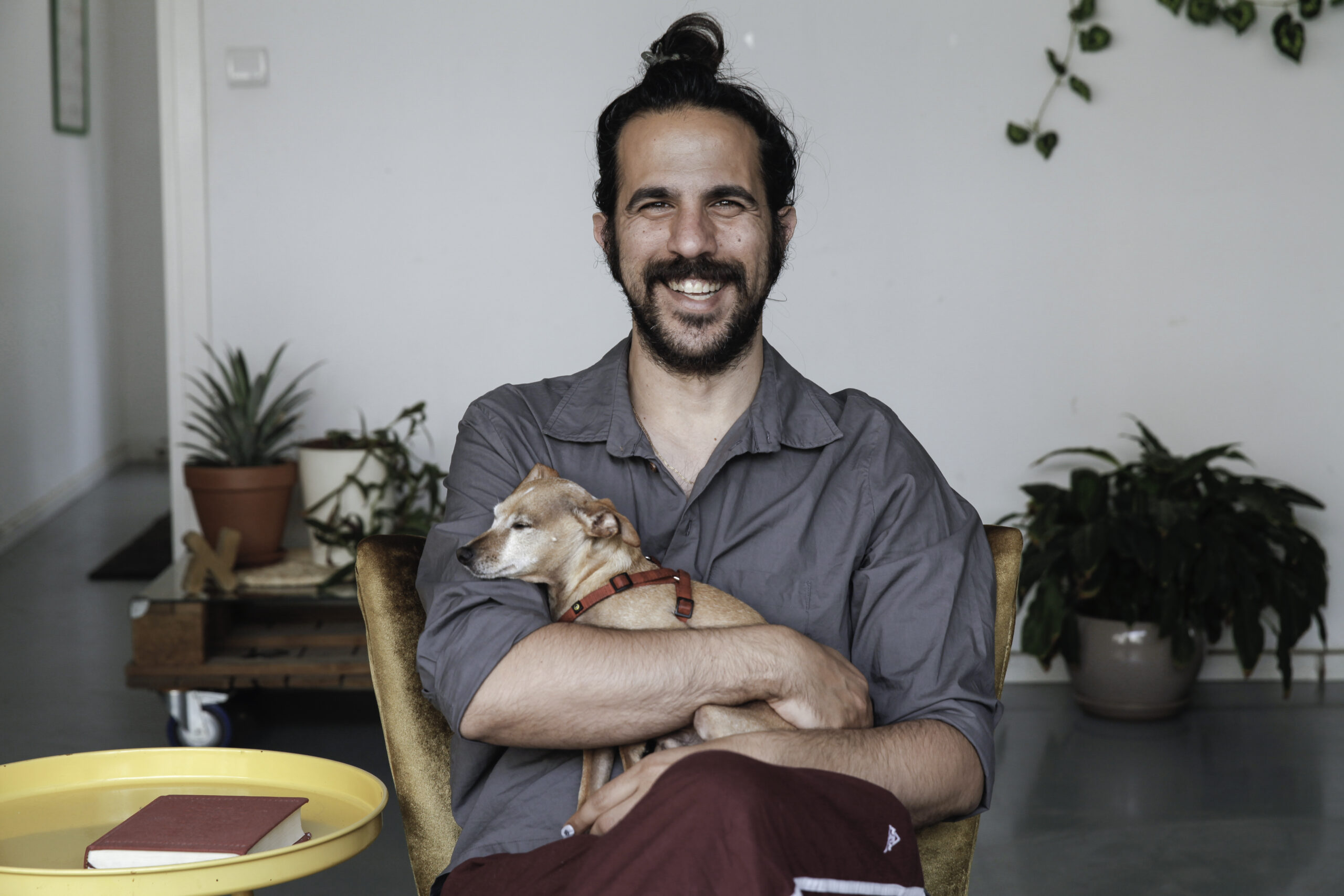
Yaron Sivan
Yaron founded Ulpan Bayit in Tel Aviv. He writes about teaching Hebrew, learning other languages, and the things that happen along the way.