
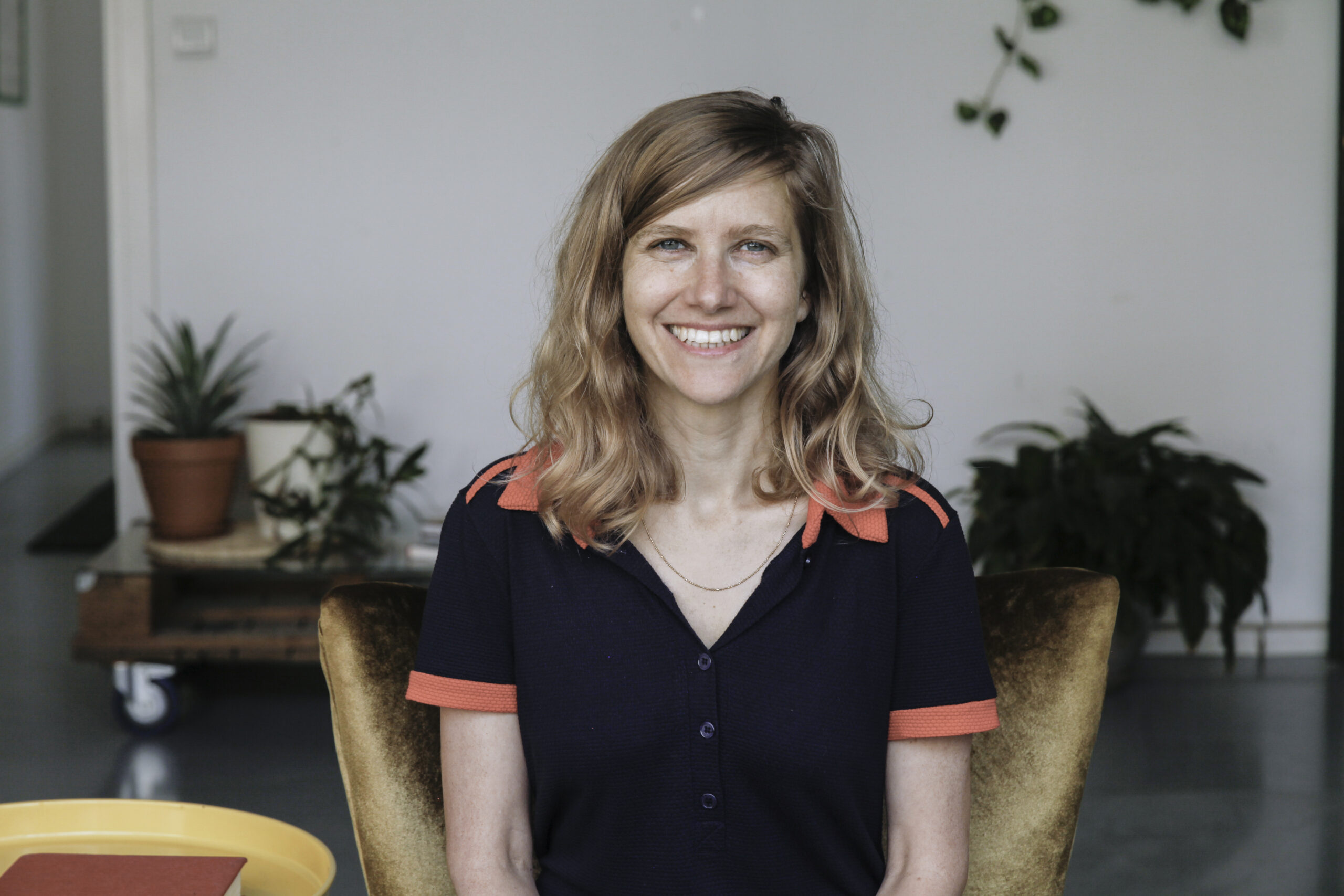
Years ago, Kosta Kaplan knocked on the door at Ulpan Bayit and said he wanted to teach here. He had heard we were the coolest ulpan in town.
I already knew Kosta. I liked him. But I told him I couldn't hire him without the professional training we required from our teachers. At the time, that meant the Hebrew teacher-training course at the Hebrew University of Jerusalem, where I had studied myself.
He asked whether I would hire him if he did the course.
About a year later, he came back, reminded me of that conversation, and showed me his certificate. He had actually gone and done it.
Of course I hired him. He's still teaching with us, and he's one of the best teachers we have.
That was how seriously we took that requirement.
The training we asked for started to fit us less well
The first group of teachers at Ulpan Bayit were people I had studied or worked with at the university. We shared a professional background, and for years it seemed obvious that new teachers should come through the same training.
Then our syllabus started changing.
As we developed our own way of teaching, we found ourselves asking new teachers to make more and more adjustments. There were things we wanted to approach more lightly, with a little less of the weight they carried in an academic setting. We wanted teachers to feel comfortable with the atmosphere and priorities of our classrooms.
So someone would finish the university course, arrive at the ulpan, and begin another long process of training with us. We would explain our approach, work through our materials, and sometimes ask them to reconsider habits they had just been taught.
After a while, our own requirement started to seem strange. We were insisting that people complete one particular training program, then spending a lot of time teaching them to do things differently.
We were doing the work twice.
Efrat gave us a reason to try
Around that time, a prospective teacher named Efrat contacted us. She wanted to take the university course and knew it was a condition for working at Ulpan Bayit. But the course wasn't opening that year, and she didn't know what to do.
We really liked her and could imagine her teaching with us. Her situation gave us a reason to stop and think about the requirement itself.
We already had linguists, experienced teachers, and people with backgrounds in research and academia on the team. We also had teachers who came from theatre and music. There was a lot of knowledge in the building, and a lot of experience making a classroom work.
We realised we could put that together into a training program of our own. We could teach our approach from the beginning, and give people a way into the profession that reflected the teaching we were actually doing.
So we started building it.
Building a course for teachers is a lot of work
It turned out to be a much bigger project than we had imagined.
There is the language itself: Hebrew grammar, linguistics, and how to look at Hebrew from the perspective of someone learning it as a foreign language. There is teaching: planning a lesson, explaining something, and understanding what students are going through as they learn.
You also end up drawing on psychology and research into learning. What is happening for the student? What are we asking their brain to do? How does that affect the way we teach?
Then there is the practical part. Trainees sit in on lessons, observe teachers, prepare lesson plans, teach real classes, and receive feedback. All of that needs organising and guidance.
Tamar Gomel, one of our most experienced teachers, took on the work of bringing the program together. She leads it today.
Over the years, dozens of people have trained with us. Some joined the teaching team at Ulpan Bayit. Others went on to teach elsewhere in Israel and abroad, including at universities. I was honestly surprised by some of the places our graduates were accepted. It has been lovely to see the training earn that kind of trust.
The program also keeps bringing new people into the ulpan. Working with them means we keep looking at our own teaching, explaining our choices, and learning about what we do.
If you're interested in teaching Hebrew, you can find the course structure, current dates and application details on our Hebrew teacher-training program page (in Hebrew).
Yaron Sivan
Yaron founded Ulpan Bayit in Tel Aviv. He writes about teaching Hebrew, learning other languages, and the things that happen along the way.