My mother is Norwegian and my father is Persian. Both immigrated to Israel, and I grew up hearing their Hebrew at home.
To me, their Hebrew sounded perfect.
I did not spend my childhood thinking that my parents had accents. They sounded like my parents. It was only when I became a teenager, and friends started commenting on the way my mother spoke, that I began to notice what they were hearing. At first, I insisted they were wrong.
So if you are learning Hebrew and worrying about your accent, there is one small reassurance I can offer from my own experience: your children may hear you quite differently from the way you hear yourself.
But this story has another part. Around the same age, I discovered that I had a few pronunciation habits of my own.
The difference I could not hear
I did not have a Norwegian accent or a Persian accent. But there were words I had learned to pronounce in the way I heard them at home.
The best example was בגדים — bgadim — clothes.
My friends kept pointing out that I said it differently. And for a while, I could not hear what they meant. Someone would say the word, I would say the word, and as far as my ears were concerned, we were doing exactly the same thing.
Eventually, after hearing the difference pointed out many times, I understood what they were talking about. There was something in the beginning of the word that I was saying differently.
And once I could hear it, I wanted to learn how to change it.
A very repetitive bus journey
At 15, I had a roughly 40-minute bus ride to school in Jerusalem. I began using part of that journey to practise the beginning of the word.
Bga. Bga. Bga. Bga.
Then the whole word: bgadim.
I would sit there doing this for about a quarter of an hour. It was a very small piece of language to spend so much time on, but I had realised that understanding the difference was only the beginning. I needed to practise making it.
Over time, I changed how I said the word. I did the same with other words when I noticed a similar problem.
Years later, after we had opened Ulpan Bayit, my friend Hadar Shemesh, an accent teacher, asked to use our space for American pronunciation workshops.
We made a deal: she could use the space, and I could sit in on the workshops.
I recognised something familiar. One of the things she taught was to take a difficult combination of sounds, practise it on its own, put it into a word, and then practise the word in sentences.
It was the approach I had stumbled into on the bus when I was 15.
Work on the bit that gets stuck
Sometimes the difficulty is the way two sounds meet. A sequence that feels ordinary in one language can feel unfamiliar in another. You might be comfortable with the st at the beginning of station, for example, while the bg at the beginning of bgadim takes more practice.
When an unfamiliar consonant combination is difficult to say, an extra vowel can slip in to separate the sounds. Linguists call this vowel insertion epenthesis. It is one of the ways speakers adapt unfamiliar sound sequences.
You do not need to learn the terminology to try the exercise. Start with one word that is giving you trouble:
- Listen for the specific difference. Ask a teacher to help you hear the part you are working on.
- Practise that small part on its own. For my example, it was the opening bga.
- Put it back into the word. Practise bgadim.
- Use the word in a short phrase. For example, הבגדים שלי — ha-bgadim sheli — my clothes.
- Move into a sentence. Give yourself a chance to use the sound while actually saying something.
Keep the practice comfortable, and return to it in short sessions. The aim is to make the sequence more familiar.
If there is a part of your Hebrew pronunciation you would like to change, you do not have to tackle everything at once. Find the small bit that gets stuck and give it some attention.
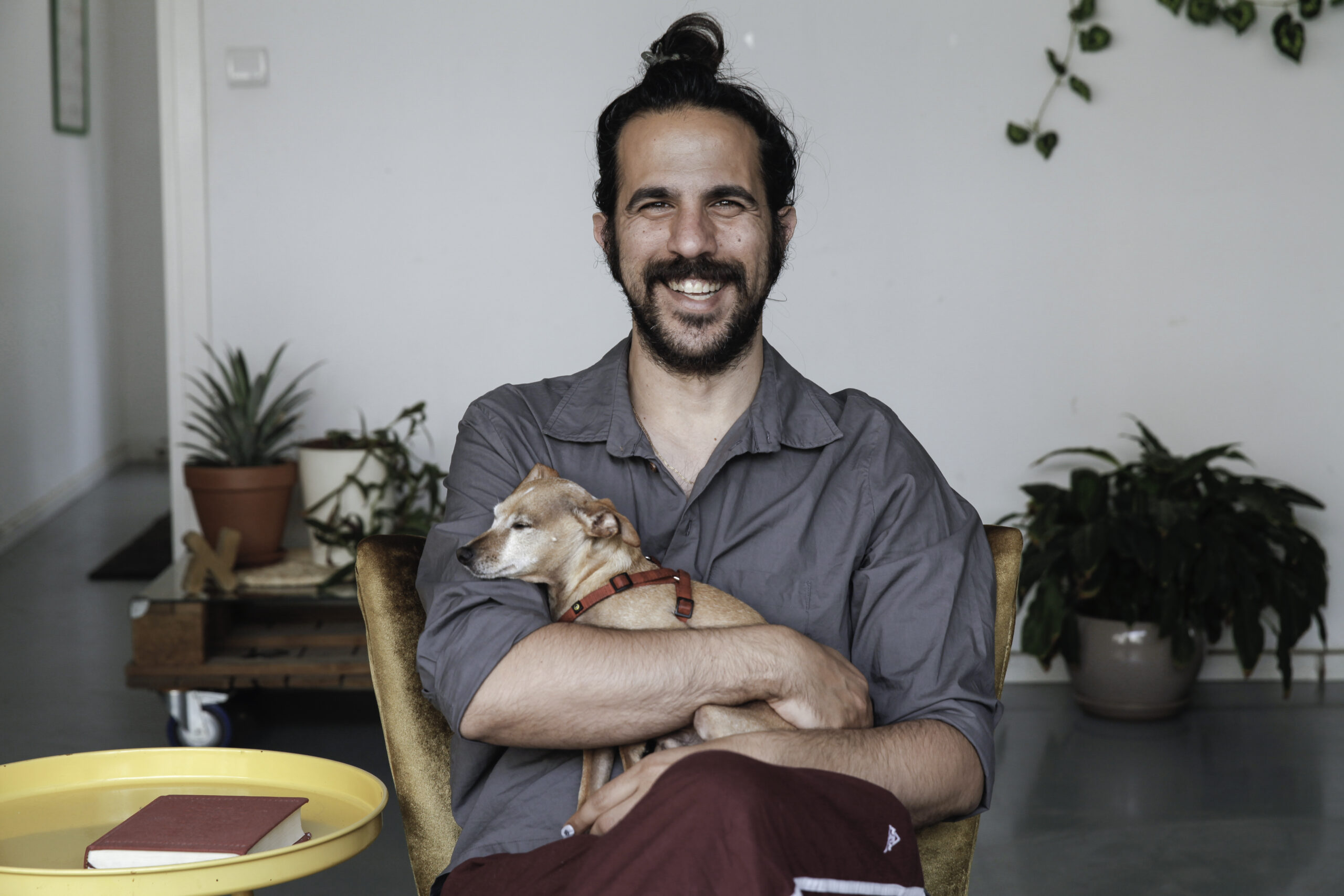
Yaron Sivan
Yaron founded Ulpan Bayit in Tel Aviv. He writes about teaching Hebrew, learning other languages, and the things that happen along the way.