You and your partner probably already have a language together. You use it to talk about work, make plans, complain about something, or decide whose turn it is to buy milk.
Then one of you starts learning Hebrew, and suddenly there is an ambitious new idea: perhaps you should speak Hebrew at home.
That can be quite a lot to ask of a beginner. You still want to have the conversations you were having before, and your Hebrew may not yet cover any of the interesting parts.
I would start with something much smaller. Use a few Hebrew words inside the language you already speak.
Mix the languages on purpose
“Do you want to go to my אמא — ima — mum on שבת — Shabbat?”
“Do you want סוכר — sukar — sugar with your coffee?”
These are mixed sentences. That is the exercise. You get to use a word you have learned while still being able to finish what you wanted to say.
You can do this with a partner, a friend or someone in your family who is happy to help. You might already use a few Hebrew words together without thinking about it. Choose a few more and make a point of using them.
I like this as a way of bringing beginner vocabulary into a relationship that already has its own habits. Nobody has to pretend that an entire dinner conversation is suddenly manageable in Hebrew.
Choose words that come up in your actual day
Look at what you talk about. Food? Family? Getting out of the house in the morning? Start there.
You do not need a long list. Three or four useful words give you something concrete to try. Make sure you both know which ones you are practising, so the other person can use them too.
If you have learned מים — mayim — water, use that word when you ask for water. When it becomes comfortable, add something else. You can ask your teacher for a short Hebrew phrase to use in the same situation when you are ready.
There is no need to replace every possible word in an English sentence. That can become hard work for everyone, especially if you have to explain each substitution before the conversation can continue.
Let your partner help without becoming your teacher
It is useful to be clear about the kind of help you want. Perhaps you want your partner to repeat a word naturally. Perhaps you want a pronunciation correction, but only for the words you have agreed to practise.
You can also agree that some conversations are just conversations. You may both prefer to discuss a difficult day in the language that lets you say what you mean.
If someone wants to help with vocabulary but finds constant switching awkward, a shared photo dictionary is another option. They can answer a picture with the Hebrew word, and you can practise it afterwards.
Give one familiar exchange a little Hebrew
You do not need to decide what language your relationship will use forever. Try one familiar exchange: making coffee, planning dinner or getting ready to leave.
Choose a couple of words for it. Say them yourself, and ask the other person to use them with you. If you forget one, ask, hear it again, and carry on with the conversation.
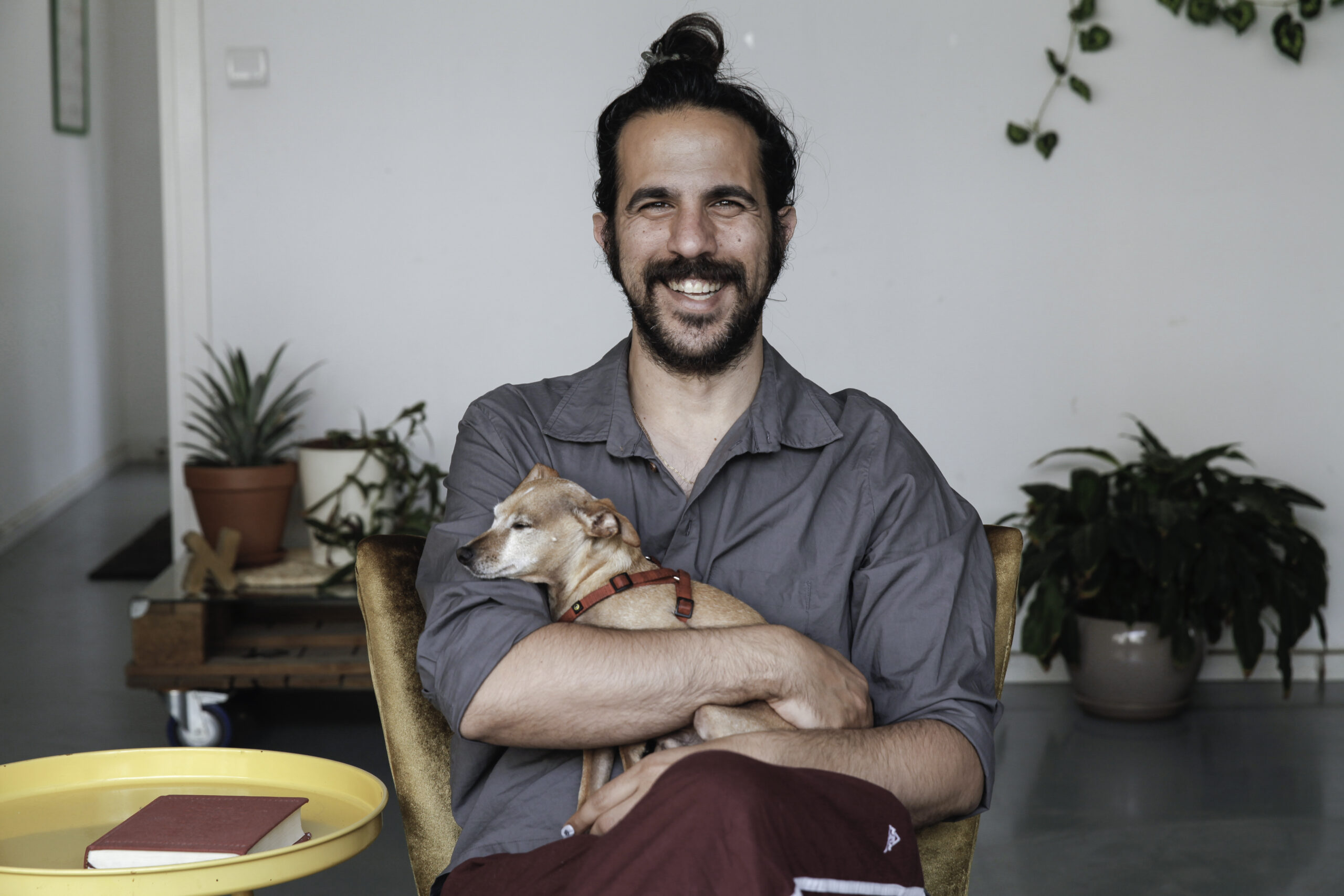
Yaron Sivan
Yaron founded Ulpan Bayit in Tel Aviv. He writes about teaching Hebrew, learning other languages, and the things that happen along the way.